-
$18.19
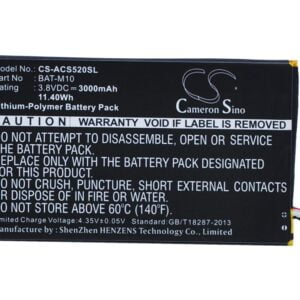
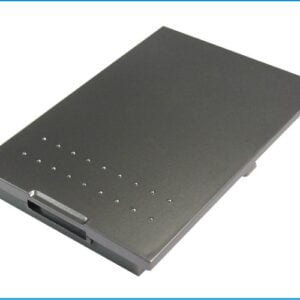
$20.92Acer 1CP415793L1 1S1P, BAT-M10, BAT-M10(1ICP5/58/94), KT.0010S.007 CS-ACS520SL
Acer3.8VAcer
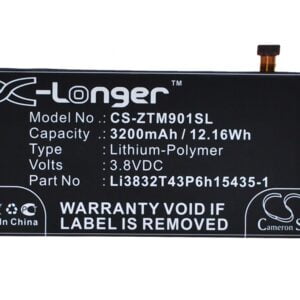
$18.19$20.92ZTE Li3832T43P6h15435-1, Li3832T43P6HC15435-1, Li3832T43P6hC15435-I CS-ZTM901SL
ZTE3.8VZTE
$16.60$19.09Sony Ericsson 1264-7064, LIS1502ERPC, US446370 CS-ERL360SL
Sony Ericsson3.7VSony Ericsson
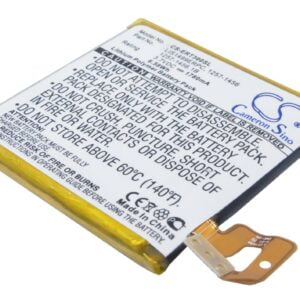
$18.98$21.83Sony Ericsson 1257-1456, 1257-1456.1B, 1261-4505, 1261-4505.1A, LIS1499ERPC CS-ERT300SL
Sony Ericsson3.7VSony Ericsson
Lithium batteries come in various chemistries, including lithium-ion (Li-ion), lithium polymer (LiPo), and lithium iron phosphate (LiFePO4). Each chemistry has its own set of characteristics, such as energy density, safety, and cost.
Energy Density: One of the primary advantages of lithium batteries is their high energy density, which means they can store a significant amount of energy in a relatively small and lightweight package. This makes them ideal for portable devices where size and weight are crucial factors.
Rechargeability: Lithium batteries are rechargeable, allowing users to charge and discharge them multiple times. They have a relatively low self-discharge rate, which means they can hold their charge for extended periods when not in use.